
Should you get Shards of Creation?
Shards of Creation is finally here. The newest Cosmere game from Brotherwise Games is a trick-taking card game featuring new canon depictions of eight of the sixteen Shards of Adonalsium.
Now that I’ve played a few rounds of Shards of Creation, I can confidently say that this is a great addition to any game library; even for those who aren’t quite as Invested in the Cosmere as we are.
Let’s take a closer look into the gameplay and art that makes this another stellar addition to the Cosmere Gaming lineup.
Playing the game
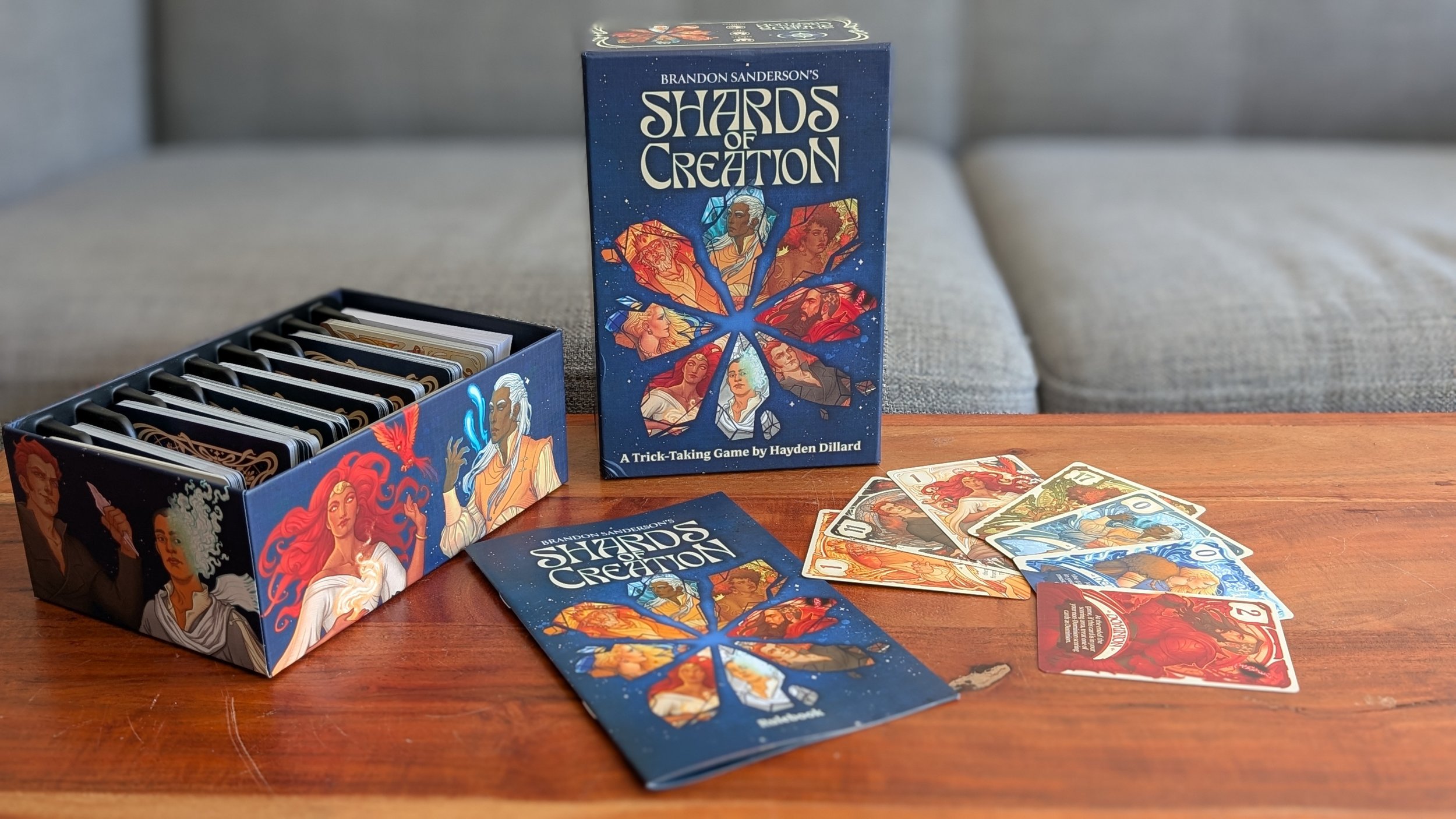
Shards of Creation by Brotherwise Games
Playing Shards of Creation is simple to play, but has a lot just under the surface. At the beginning of a game you select a number of Shards based on the amount of players in the game. The cards tied to that Shard form the common deck that every player draws their hands from. In each round of play, one of the Shards will become active, giving the game special rules that apply just to that round. The different Shards have playstyles unique to their nature that affect gameplay.
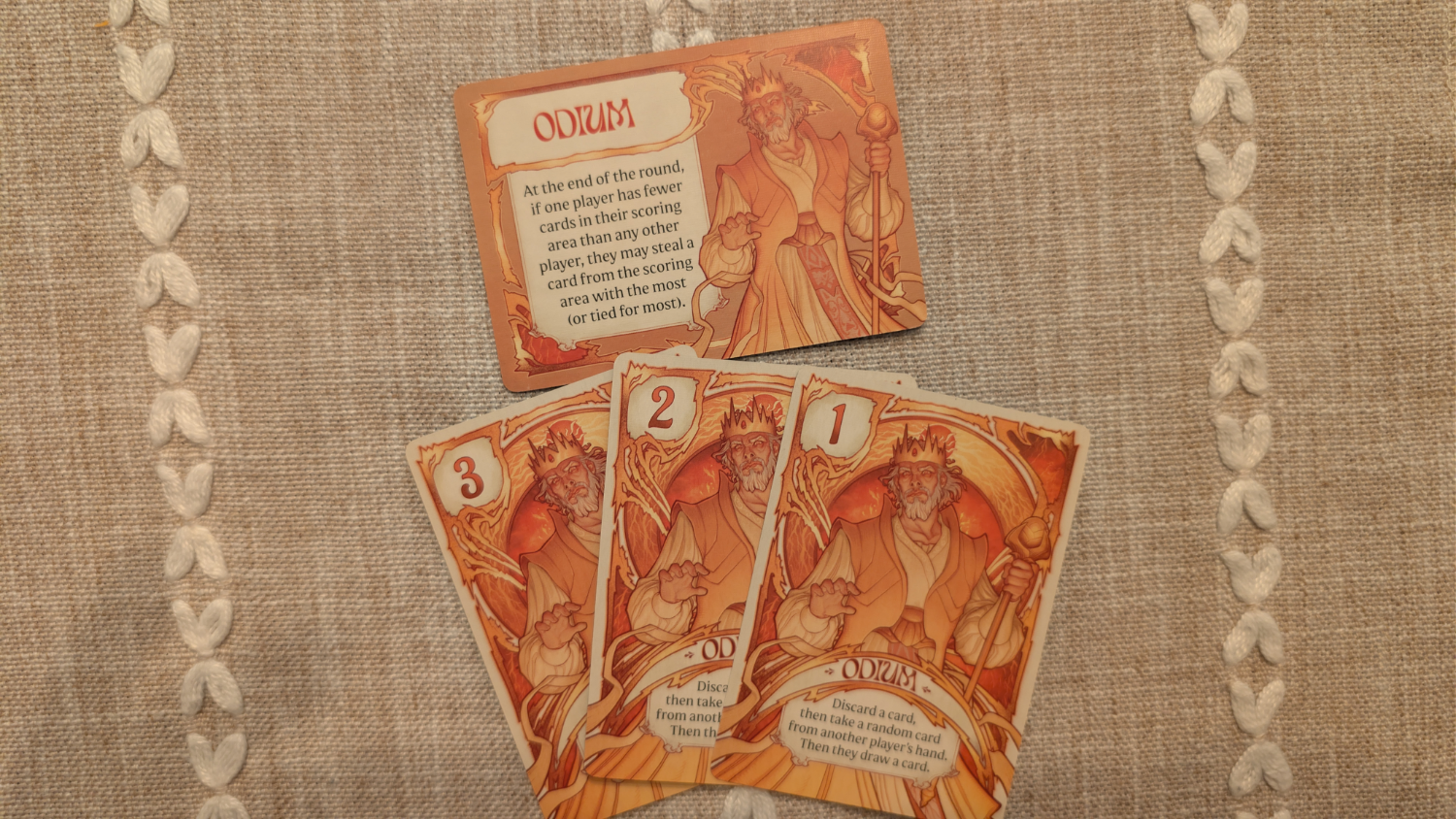
Having Odium in play will have players manipulating each other’s scores.
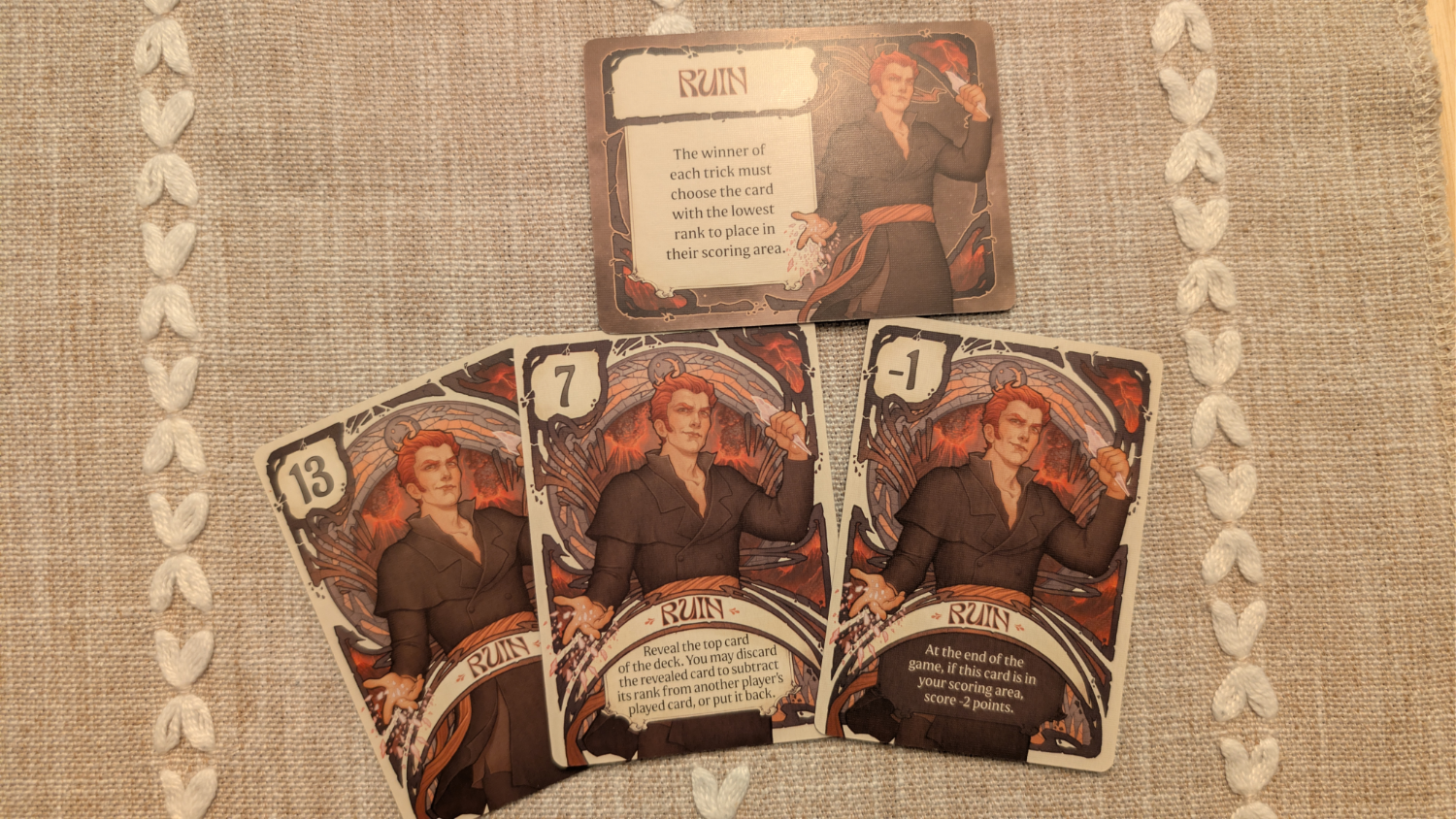
Ruin has high risk, high reward scoring opportunities, allowing you to undermine your opponents score; if you can manage to prevent them from doing the same.
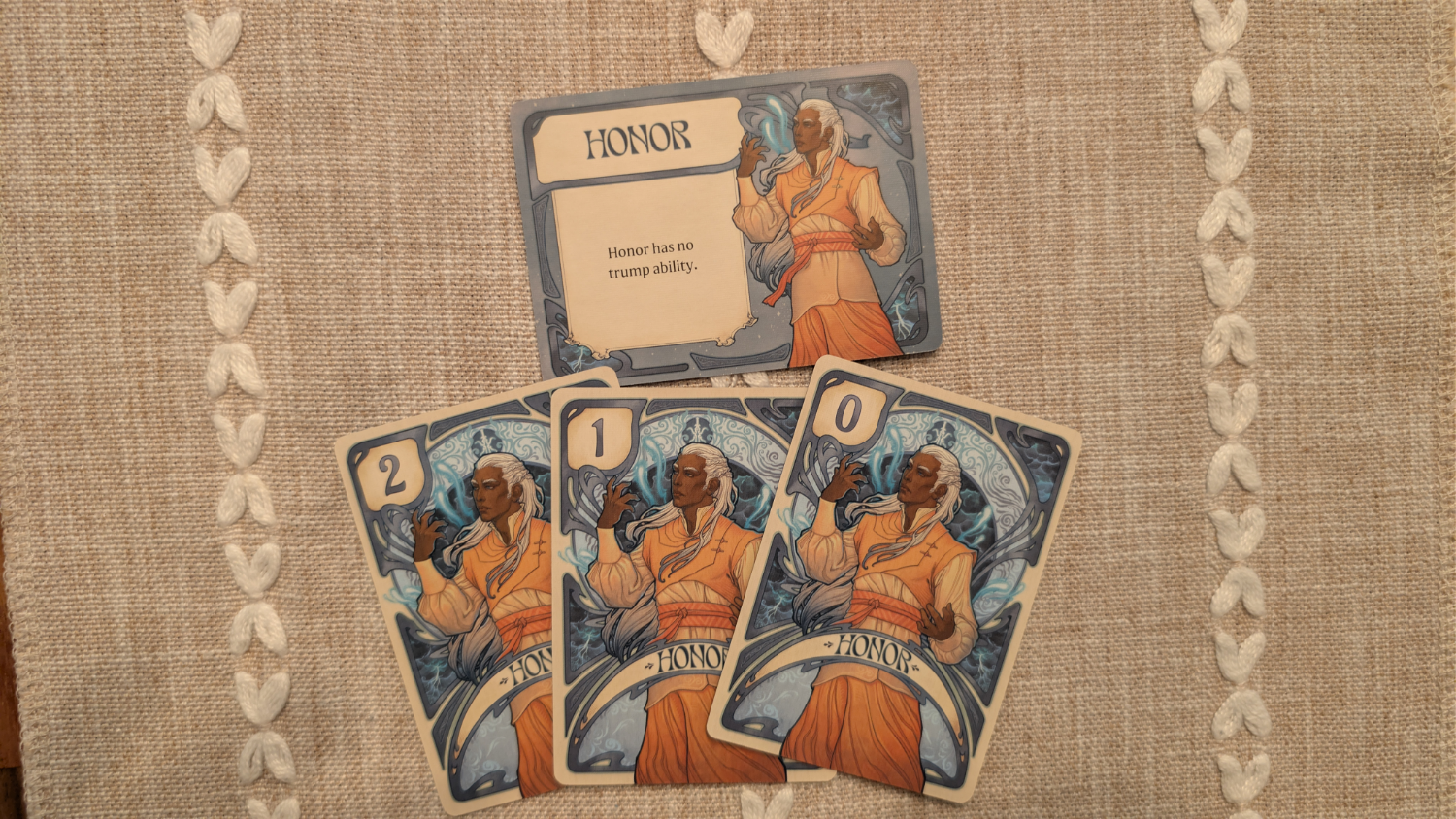
And well, Honor has no special rules. Just a straight up fair match.
Once a round starts and a Shard has been randomly selected, each player draws a hand from the shared deck and “tricks” are played.
Trick-taking games are loaded with game-specific phrases that are confusing and only barely descriptive. I will skip that language and put things as plainly as I can, where I can.
Here are the basics: the goal of each round of play is the highest value card of a given Shard. The player who gets to play their card first gets to determine which Shard is the “lead.” All other players must play a card of that Shard if possible, and if not, they can try for that randomly selected Shard. The winner is whoever has the highest value card from the lead Shard, or the round’s randomly selected Shard.
That winning player chooses a card to add to their “scoring area”, then all players discard their hands and a new round begins.
Play continues with the same randomly selected Shard until all players are left with only one card in hand, which is then added to the scoring area.
When the next round begins, you choose a new randomly selected Shard and start the process over.
Depending on the Shards in play, these rules might change a bit. For example, Ruin makes it so that the winner of a trick must take the lowest played card for their scoring area, instead of choosing one for themselves.
Once you’ve played through the recommended number of rounds (depending on player count), you total your score by matching sets of Shards using the included scoring guide. The winner is the player with the most points!
It sounds complicated on paper, but you catch on quick after just a few rounds.
Depth
On the surface, Shards of Creation can be a fairly quick and straight forward game, especially when you have Shards with relatively simple rules.
Just beyond that first impression is a world of depth. Using that Ruin example, you have to balance high rank card values with the risk of getting stuck with negative point values. The opportunities to manipulate your opponents scoring area go beyond just negative score: you could drop a low value card of Shard they are already stacked in, ruining their set scores in final scoring, or forcing them to focus on other Shards later on in the game.
With eight playable Shards you have a possibility of 70 different combinations for a 2 or 3 player game, and 56 combinations for a 4 player game. Repeated play will feel fresh for quite some time.
Should you get it?
Yes. Obviously.
Shards of Creation is a simple card game that even non-Cosmere fans and diehards alike can enjoy. There’s no deep lore here, save the simple satisfaction that the Shards “feel” like themselves, but don’t actively require any knowledge of the books to appreciate.
With a minimum of two players and a fairly quick turn around time for each game, this is the perfect addition to your casual board / card game shelf.
